



Kimera

Home > Blogs > Care For Curly Hair:Do’s and Don’ts You Should Know

Care for Curly Hair: Do’s and Don’ts You Should Know

“I spend nearly 30 minutes styling my curls every morning, yet by lunchtime they look dry and undefined.” If this feels familiar, you are not alone. According to a global hair texture study by L’Oréal Research & Innovation, over 40% of the world’s population has naturally wavy or curly hair.

It means that more than half of hair-care products sold globally are formulated primarily for straight-hair behavior. Because of this mismatch, people with curls often follow routines that unintentionally increase dryness, frizz, and breakage.

In fact, dermatological surveys show that individuals with curly hair experience greater moisture loss along the hair shaft than those with straight hair. Therefore, when traditional routines recommend daily shampooing or frequent brushing, curls respond negatively because they function differently.

So instead of asking, “Why doesn’t my hair behave?” a better question might be: Is my routine designed for curls at all? Let’s understand what works for curly hair.

Why Does Curly Hair Behave Differently?

Curly hair strands grow in asymmetrical follicles, creating bends along the fiber. The natural scalp oils travel through gravity and surface tension, which is why they struggle to move past each curve.

As a result, the mid-lengths and ends remain under-lubricated. For example, someone working eight hours a day in an air-conditioned office experiences constant evaporation of moisture.

Research published in the International Journal of Cosmetic Science shows that indoor climate-controlled environments can reduce hair moisture levels by up to 18% within six hours.

Consequently, curls expand outward, seeking humidity, which appears as frizz.

This explains why hair care for curly hair focuses on preserving moisture rather than removing oil. Once you understand this biological limitation, many common problems suddenly make sense. Have you ever wondered why your scalp feels clean but your ends feel rough on the same day? That contrast is structural.

The Do’s of Curly Hair Care

Caring for curly hair becomes easier when you understand which habits actively support moisture and your curl definition. The following practices are not trends but proven techniques that help curls stay healthy and consistent in real-life daily routines.

Do Condition Based on Hair Stress Exposure

Conditioning repairs the friction damage created during daily activities. However, the amount needed depends heavily on lifestyle.

For instance, commuters exposed to pollution particles experience microscopic buildup along hair cuticles. Environmental studies show airborne particles increase surface roughness, which leads to tangling. Therefore, deeper conditioning twice weekly helps smooth the cuticle layer.

Meanwhile, someone who exercises regularly produces more sweat salts on the scalp. These salts dehydrate strands, making lightweight hydrating conditioners more effective than heavy masks.

Because curls lose moisture faster, consistent conditioning becomes the foundation of hair care for curly hair, not an optional step.

Instead of asking, “Should I condition today?” try asking, “What stress did my hair experience this week?”

Do Adjust Washing Frequency Scientifically

Many people either over wash or under wash because they follow fixed rules online. However, dermatologists recommend adjusting washing frequency according to sebum production.

Data show that the average scalp produces 1 gram of sebum every 24 to 48 hours, but curly hair distributes only a fraction of it along its strands.

Therefore:

  • Many people either over wash or under wash because they follow fixed rules online. However, dermatologists recommend adjusting washing frequency according to sebum production. 
  • Data show that the average scalp produces 1 gram of sebum every 24 to 48 hours, but curly hair distributes only a fraction of it along its strands. 

When washing too often, shampoos remove lipids essential for elasticity. Studies indicate repeated cleansing can reduce the tensile strength of curly fibres by up to 20% over time. Balanced cleansing is therefore essential for sustainable hair care routines for curly hair.

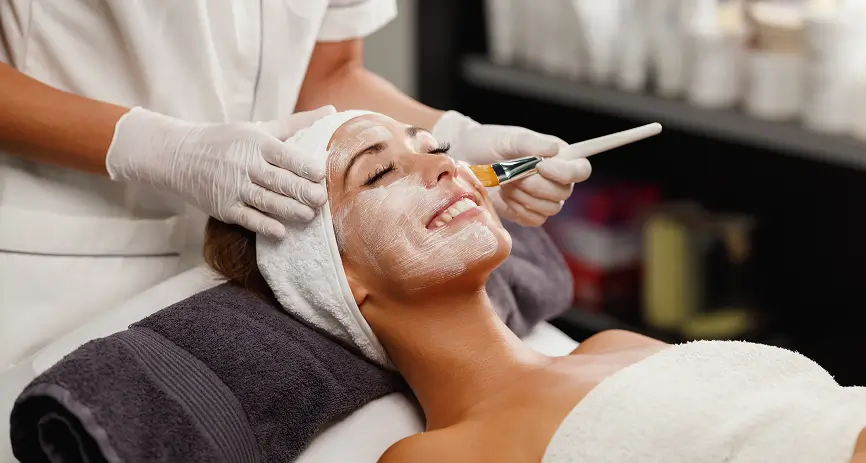
Best Facials for Sensitive Skin

Do Apply Styling Products Immediately After Washing

Timing influences hydration retention more than product quantity. Cosmetic formulation tests reveal that applying leave-in conditioner within three minutes of rinsing improves moisture retention.

Consider a real-life morning scenario. You wash your hair, wrap it in a towel, prepare breakfast, and return after ten minutes to style. By then, uneven drying has already started, preventing uniform product absorption.

Instead, apply products while hair remains fully wet. This ensures curls form structured clusters rather than separated strands. As a result, styling becomes faster and lasts longer throughout the day.

Do Protect Hair During Sleep

Night-time friction causes cumulative damage. Textile research shows cotton fibres create higher friction coefficients compared to satin surfaces, increasing strand stress during movement.

For example, people who change sleeping positions frequently often experience crown frizz despite careful styling. Switching to satin pillowcases reduces frictional force significantly, preserving curl alignment overnight.

Many curl specialists observe visible improvement within 5–7 days after this change alone

The Don’ts of Curly Hair Care (And Why They Fail)

While the right habits strengthen curls over time, certain common practices quietly damage texture and disrupt natural curl formation. Understanding what not to do is equally important because many everyday mistakes happen unknowingly during regular styling routines.

  • Don’t Brush Dry Hair
    Dry brushing disrupts curl grouping, which scientists call “fibre clustering.” Once clusters separate, each strand absorbs humidity independently, producing frizz. Here is one simple example to consider: brushing before leaving for work may temporarily look neat, but within 30 minutes, humidity expands individual strands.Detangling during conditioning reduces mechanical stress by nearly half as compared to dry brushing, according to trichology research.
  • Don’t Depend on Heat for Daily Control 

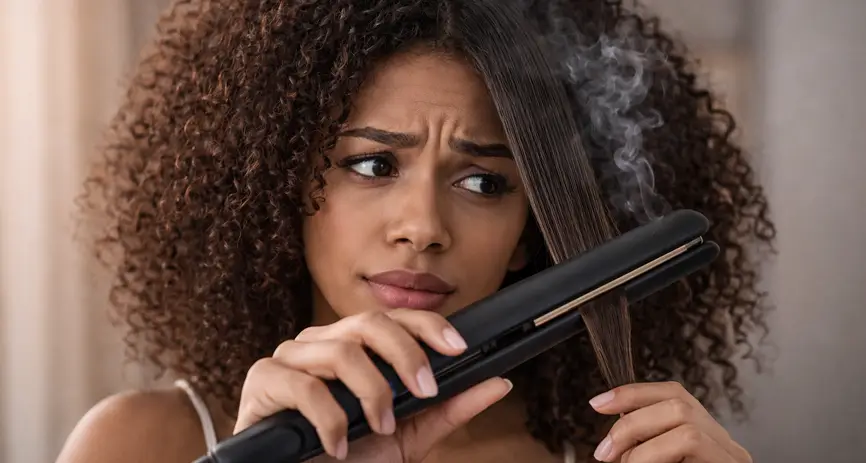
    Heat tools reshape keratin bonds temporarily. However, repeated exposure weakens structural integrity. Data from heat-damage studies show temperatures above 180°C can permanently alter curl patterns after repeated use. Someone straightening front sections daily for office styling often notices uneven curls within months, not because hair texture changed naturally, but because bonds weakened. We can say that moderation protects long-term curl memory.

Don’t Use Oils Without Hydration

Oil molecules are occlusive, meaning they trap existing moisture. However, applying oil alone does not hydrate hair.

For example, applying coconut oil before stepping outdoors may initially reduce frizz. However, by evening, curls feel heavy yet dry because moisture was never added. Effective hair care for curly hair follows a sequence: hydrate first, seal second

Don’t Rough-Dry Hair

Mechanical friction from towel rubbing raises cuticle layers. Once lifted, strands lose smoothness and reflect less light.

Using cotton T-shirts instead reduces friction while maintaining curl formation. These types of small habit changes produce measurable improvements over weeks

A Realistic Weekly Curl Routine (Example Schedule)

Day / ScenarioRoutine ActionExpected Result
Sunday – Reset & RecoveryWash hair gently and apply deep conditioner for 10–15 minutesCurls feel soft, hydrated, and well-defined at the start of the week
Monday – Workday StylingApply leave-in conditioner on damp hair and air-dry or diffuse lightlyDefined curls that last through office hours with minimal frizz
Wednesday – Midweek RefreshMist hair with water and scrunch using a small amount of curl creamBounce and shape return without restarting the entire routine
Friday – Presentation or Meeting DayDiffuse curls for 3–5 minutes, focusing on rootsFuller, professional-looking curls with reduced styling time
After 4 Weeks (Outcome)Maintain a consistent routineStyling time reduces from ~30 minutes daily to under 10 minutes
This demonstrates how structured hair care for curly hairs improves efficiency, not just appearance.

Conclusion

Curly hair care becomes easier once you replace assumptions with understanding. If you are unsure where to begin or want personalised guidance tailored to your curl type, professional expertise can make a meaningful difference.

Kimera Salon and Spa, with over 15 years of experience in specialised hair and scalp care, focuses on understanding individual hair textures and creating customised solutions for long-term curl health.

Whether you need hydration treatments, curl restoration, or expert styling advice, the right professional support can help you transition from managing curls to truly enjoying them. Book your consultation at Kimera Salon and Spa today and give your curls the expert care they deserve.

Disclaimer: Every treatment or procedure suggested on this blog may vary from guest to guest, as each person’s hair and skin are unique and may respond differently. Book an appointment at our salon for a free consultation before proceeding with any treatment or procedure.

FAQs

1. Why does curly hair dry faster than straight hair?

Because natural oils cannot travel evenly along curved strands, moisture escapes more quickly.

With consistent hydration routines, noticeable improvement usually appears within 3–6 weeks.

Light water refreshing is safe if followed by conditioning products.

Yes. Humidity and temperature significantly influence curl expansion and moisture retention.

Applying products on soaking wet hair combined with satin sleep protection often shows rapid results.

Related Blogs

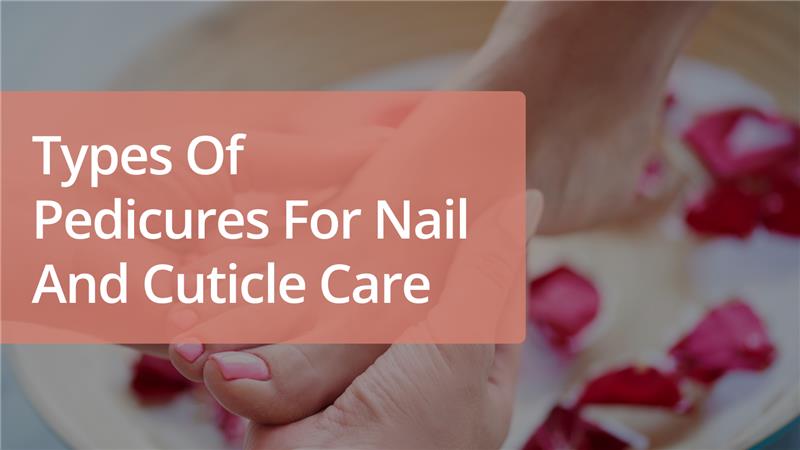
Types of Pedicures for Nail and Cuticle Care

Types of Pedicures for Nail and Cuticle Care 

Have you ever looked down at your feet and thought, “I moisturize, I trim my nails… so why do they still look tired?”

Feet are often the most neglected part of body care, even though they handle thousands of steps every single day. Problems like dry cuticles, rough heels, and uneven nails don’t happen overnight.

Read More »

12 Swedish massage benefits You Should Know 

Did you know that more than 1 in 4 adults experience chronic muscle pain or stiffness every single week, yet most of them rely only on painkillers or quick fixes?

A lot of people don’t realize that a simple, well-executed Swedish massage can address the root of that discomfort rather than just mask it.

Read More »
Scroll to Top
Book an Appointment