
20 Trending Hairstyles for Wedding in India for 2026
Whether you are planning your mehendi, haldi, sangeet, wedding ceremony, or reception, here are 20 trending hairstyles for a weddings in India for 2026 to bookmark.

Table of contents
Share this article
Dark facial hair, uneven-looking skin tone, or a face that suddenly looks dull can make you feel less confident, even when your skin itself is perfectly healthy.
Facial hair is completely normal, but for many people, the contrast between dark hair and the surrounding skin can make it more noticeable. In fact, hirsutism, which refers to excessive coarse hair growth in a typically male pattern, affects around 5–10% of women.
This is where facial bleaching can become part of a beauty routine. Unlike waxing or threading, facial bleach does not aim to pull hair from the root. Instead, it lightens the visible hair so it blends more closely with your natural skin tone. But there is more to the process than simply applying a product and washing it off.
So, how does face bleach work? What can you realistically expect from it? What are the face bleach benefits? And how should you care for your skin afterwards? Let us explore everything you need to know.
Face bleaching is a cosmetic treatment designed primarily to lighten the appearance of facial hair. Facial bleach products generally contain an activating or oxidising ingredient that changes the colour of the hair, making darker facial hair appear lighter and less noticeable.
It is important to understand one distinction: facial bleach does not remove hair. The hair remains in place, but its colour becomes less prominent.
For example, imagine someone has fine hair around the upper lip, cheeks or jawline that appears dark against their complexion. Threading would remove that hair, while bleaching would leave it there but make it visually blend into the surrounding skin.
This can be particularly useful for people who prefer not to remove fine facial hair or want a quick cosmetic grooming option.
When performed correctly with a product specifically formulated for facial use, bleaching can offer several cosmetic advantages. Below are some of the face bleach benefits:
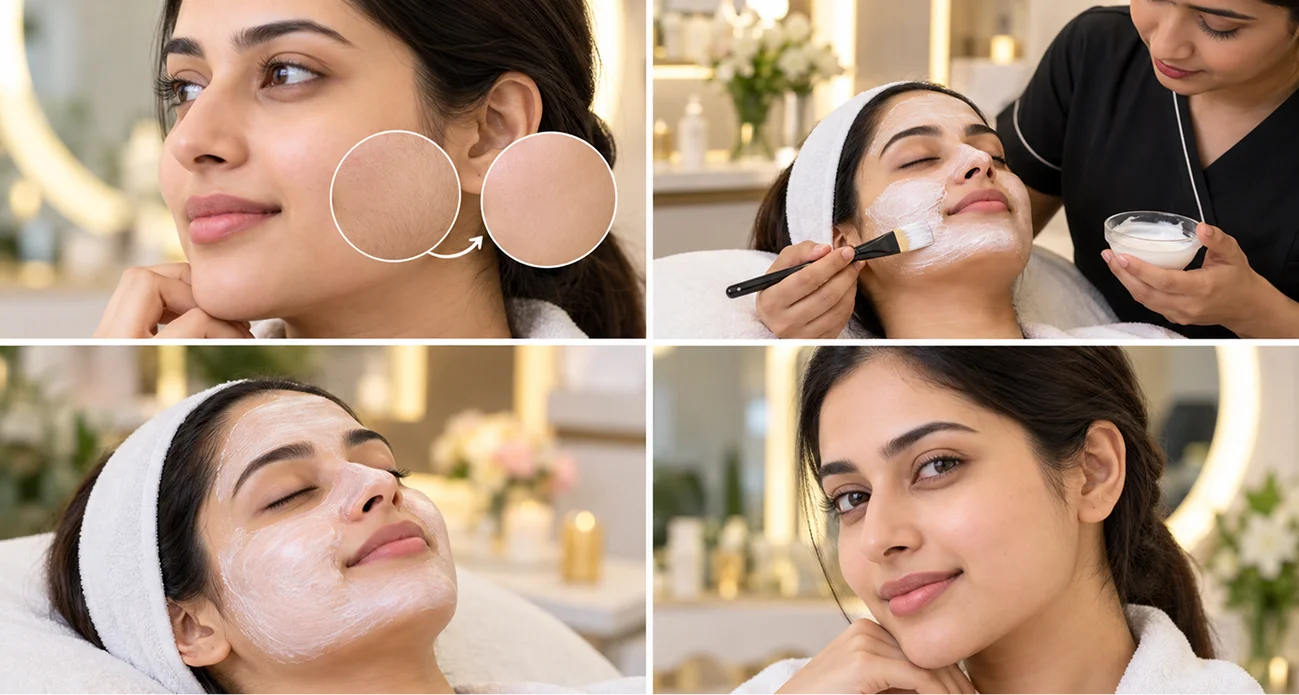
For people with fine facial hair, the goal is generally not to make the face completely hair-free. Instead, the aim is to make the hair less noticeable while retaining a natural appearance.
That said, results vary depending on your natural hair colour, hair thickness, skin type and the product being used.
A professional facial bleaching service generally begins with assessing the skin and selecting an appropriate facial product.
The skin is cleansed to remove makeup, oil and other surface impurities. The bleaching mixture is then prepared according to the product’s instructions and applied carefully to the intended areas.
The product remains on the skin only for the recommended time before being thoroughly removed.
This timing matters. Leaving a chemical product on the skin for longer does not necessarily mean better results. Excess exposure can increase the risk of irritation or chemical burns. Similar precautions are recommended with other facial chemical products: follow the manufacturer’s directions carefully and rinse thoroughly when instructed.
Here is a step many people are tempted to skip: the patch test. Even if you have used facial bleach before, your skin can become more sensitive over time. A patch test can help identify an unexpected reaction before the product is applied to a larger area.
This is especially important for people who already know that their skin reacts easily to cosmetics.
And there is good reason to take sensitivity seriously. A nationwide study of the Indian population found that 36.7% of women surveyed described their skin as sensitive or very sensitive.
If a patch test produces significant redness, burning, swelling, itching or discomfort, do not proceed without appropriate professional advice.
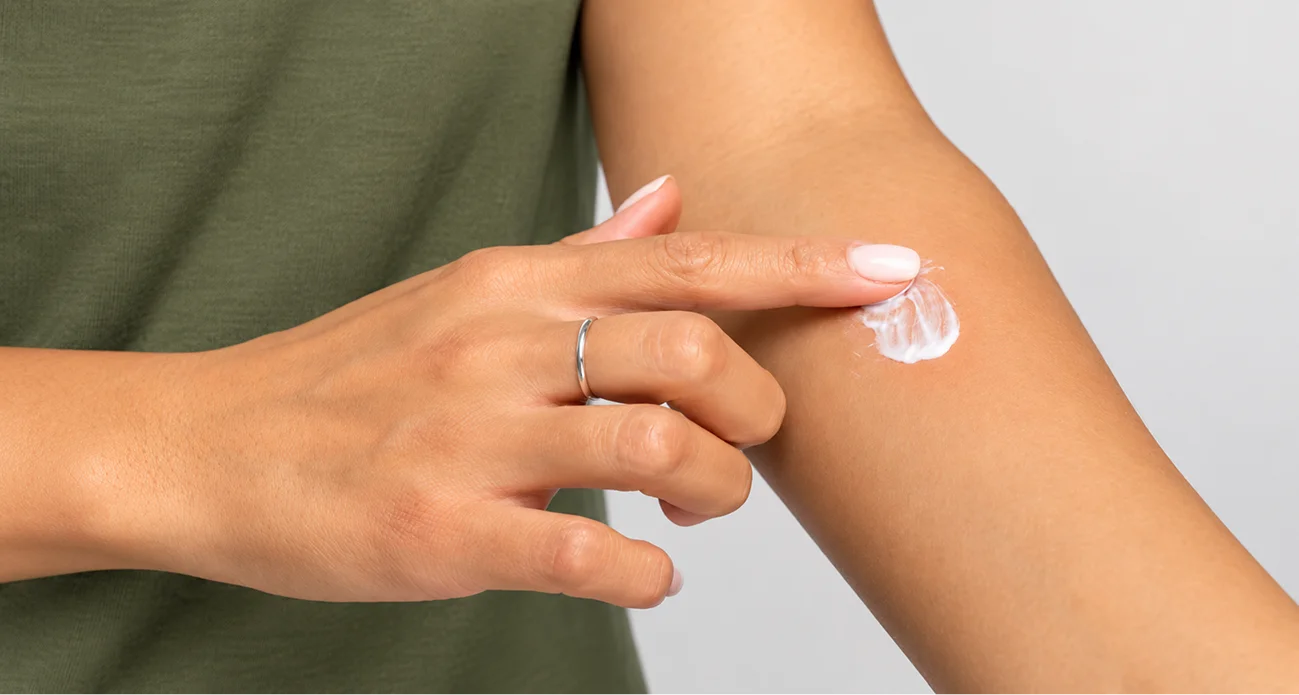
Not necessarily. Sensitive, irritated, sunburned or damaged skin may be more vulnerable to discomfort from cosmetic chemicals. If you have active irritation, cuts, rashes or a compromised skin barrier, it is sensible to postpone the treatment.
People dealing with pigmentation conditions should also be cautious. Irritation itself can contribute to pigmentation changes, particularly in darker skin tones. The American Academy of Dermatology notes that irritating skin-care products can contribute to dark spots and recommends choosing gentler products when pigmentation is a concern.
Remember: facial bleach is not a treatment for melasma, acne scars or hyperpigmentation. If your concern is an actual pigmentation problem rather than the appearance of facial hair, a dermatologist can help determine the appropriate treatment.
This is one of the most common points of confusion.
Many people also confuse face bleach vs facial treatments. While face bleach focuses strictly on lightening the color of fine facial hair, a facial is a comprehensive skin treatment designed to cleanse, exfoliate, hydrate, and nourish the skin barrier.
So, if your concern is simply that fine hair looks too dark, bleaching may address the appearance without physically removing it. If you want the hair gone, another hair-removal method may be more appropriate.
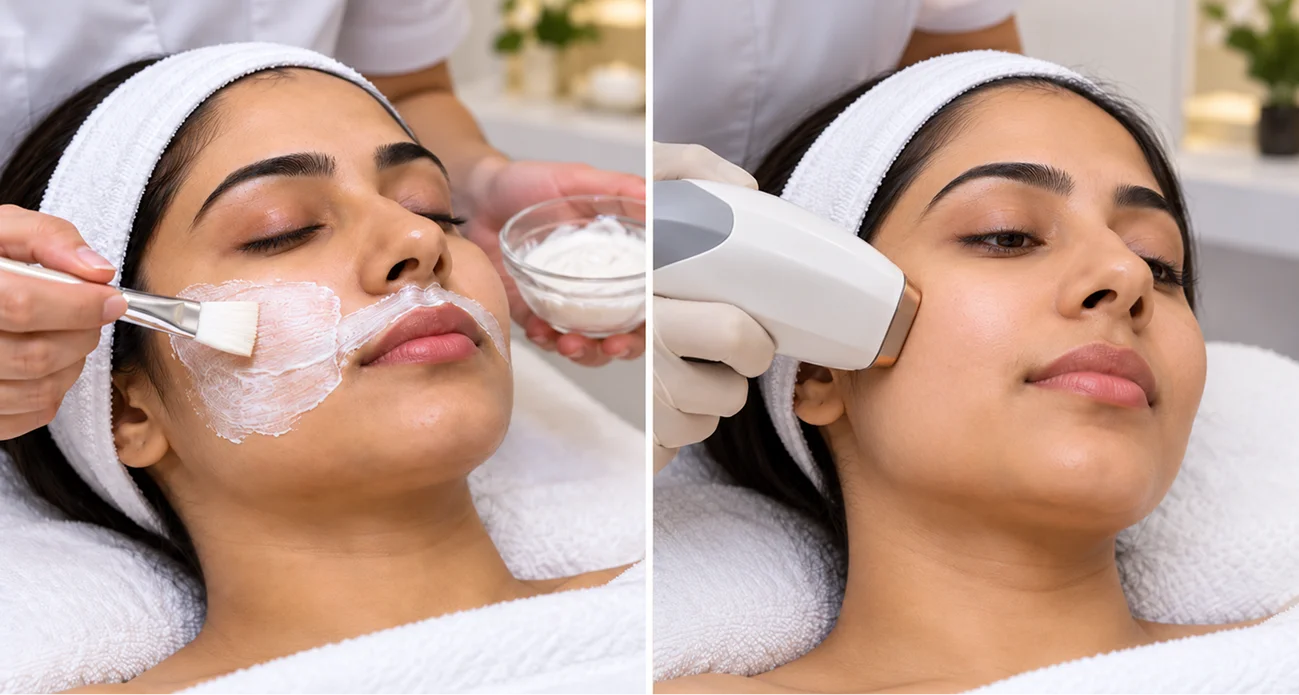
After bleaching, avoid immediately overwhelming your skin with scrubs, strong exfoliants or multiple active ingredients. A gentle cleanser and moisturiser are generally more appropriate.
Dermatologists also recommend being gentle with exfoliation because aggressive exfoliation can irritate the skin and, in some people, contribute to increased pigmentation.
If you’re planning facial bleaching, think about what your skin has already been exposed to.
Avoid bleaching over irritated or sunburned skin. Also be cautious about combining several potentially irritating treatments close together.
If you regularly use exfoliating acids, retinoids or other strong skincare activities, discuss your routine with a qualified professional before undergoing a cosmetic treatment.
Mild temporary sensitivity can occur with some cosmetic treatments, but significant burning, swelling, blistering or persistent redness should not be ignored.
If a product causes intense discomfort, remove it according to the product’s safety instructions and seek appropriate medical advice, particularly if symptoms are severe or do not settle.
Facial skin deserves extra care because irritation can sometimes be followed by pigmentation changes. This is especially relevant for people prone to post-inflammatory pigmentation.
Facial bleaching can be a convenient grooming option for people who want to make fine, dark facial hair less noticeable without removing it. The key is understanding what the treatment actually does, choosing a product intended for facial use, performing a patch test, following the recommended timing and taking care of your skin afterwards.
Most importantly, beautiful skin is not about changing your natural appearance, it is about choosing treatments that make you feel comfortable and confident in your own skin.
Are you considering professional facial bleaching and want a carefully performed beauty treatment?
Then visit Kimera Salon and speak with the team about the option that suits your skin and grooming needs. Book your appointment with us and enjoy a personalised salon experience focused on comfortable, well-cared-for skin.
Facial bleach helps lighten the appearance of facial hair, making it less noticeable, while a facial focuses on cleansing, exfoliating, and nourishing the skin. A facial can help improve skin texture and hydration, whereas bleach mainly changes the appearance of facial hair. The right choice depends on your skin type and skincare needs.
Whether you are planning your mehendi, haldi, sangeet, wedding ceremony, or reception, here are 20 trending hairstyles for a weddings in India for 2026 to bookmark.

There’s nothing more frustrating than spending time and money on a beautiful set of nail extensions, only to notice lifting, cracks, or grown-out nails a week or two later. If you have ever wondered, “How long are my nail extensions supposed to last? ” You are not alone.
Have you ever spent weeks growing a beard, only to realize it doesn’t look nearly as good as you imagined? Maybe it makes your face appear rounder, hides your jawline, or simply feels untidy despite regular trimming.
WhatsApp us