What Is Aromatherapy Massage? Benefits, Oils & What to Expect
When your shoulders feel permanently tense, your mind refuses to slow down, and even a full night’s sleep does not seem to leave you refreshed, relaxation can feel surprisingly difficult.

Table of contents
Share this article
Frizzy hair, stubborn curls and unmanageable strands can make everyday hairstyling frustrating. You may spend hours brushing your hair or using a straightener only to see it turn frizzy again after stepping outside. This is why many people consider chemical hair treatments to achieve smooth and manageable hair.
Two popular options are hair smoothening and hair rebonding. Both treatments help reduce frizz and give your hair a straighter appearance. However, they work differently and produce different results.
So, when comparing hair smoothening vs rebonding, which treatment should you choose? Is smoothening better for natural-looking hair? Or does rebonding offer the straight and sleek finish you want?
Understanding their differences can help you make the right decision. Let’s explore how these treatments work and which one may suit your hair type and styling preferences.
Hair smoothening is a chemical hair treatment that reduces frizz and makes rough or wavy hair softer and easier to manage. It works by using chemical formulations that temporarily alter the hair’s structure and help control its natural texture.
The main purpose of hair smoothening is to give your hair a polished and manageable appearance without making it completely flat or pin-straight.
For example, if you have naturally wavy hair that becomes frizzy during humid weather, smoothening can help control the waves and create a softer finish. Your hair can still retain some natural movement and volume.
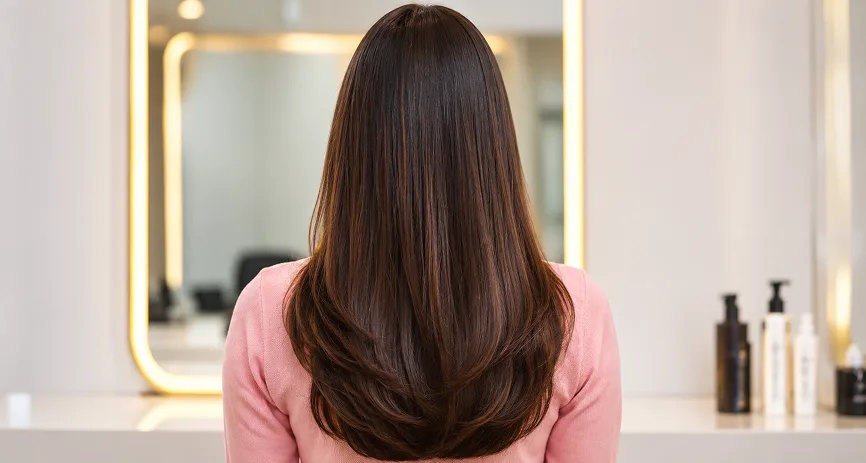
Hair smoothening offers several benefits for people who struggle with dry and frizzy hair.
Hair smoothening generally lasts around 2 to 5 months. However, the results depend on your hair type, the products used and your aftercare routine.
As your hair grows, the new growth retains its original texture. Regular conditioning and suitable hair care products can help maintain the smooth appearance for longer.
Hair rebonding is a chemical hair straightening treatment that permanently changes the natural structure of your hair. It breaks and reforms the internal bonds responsible for your hair’s natural shape.
During the treatment, a stylist applies a chemical relaxer to soften the hair structure. The hair is then straightened using a flat iron. A neutralising solution helps reform the bonds in their new straightened position.
The result is noticeably straight and sleek hair.
For example, if you have naturally curly or tightly wavy hair and want a completely straight appearance, rebonding may be an option worth considering.
Unlike smoothening, rebonding aims to remove your natural curls and waves rather than simply reduce frizz.
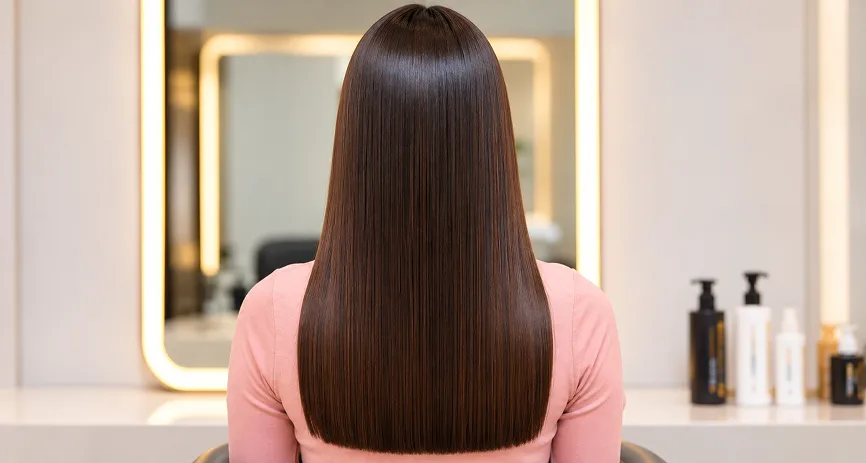
Hair rebonding can last around 6 to 12 months or longer, depending on your hair growth and maintenance routine.
However, remember that the treatment does not permanently change newly grown hair. Your natural curls or waves will appear at the roots as your hair grows.
Although both treatments aim to make hair smoother and easier to manage, their results and chemical processes are quite different.
Here is a simple comparison to help you understand the difference between smoothening and rebonding.
| Comparison | Hair Smoothening | Hair Rebonding |
|---|---|---|
| Main purpose | Reduces frizz and smoothens hair | Makes hair straight |
| Results | Natural-looking smooth hair | Sleek and pin-straight hair |
| Hair texture | Retains some natural texture | Changes natural hair structure |
| Suitable for | Wavy and frizzy hair | Curly and highly wavy hair |
| Duration | Around 2 to 5 months | Around 6 to 12 months or longer |
| Hair volume | Generally retains more volume | Can make hair appear flatter |
| Chemical effect | Depends on the formulation used | Permanently restructures treated hair |
| Maintenance | Regular conditioning and care | Root touch-ups and careful maintenance |
| Damage risk | Can cause dryness and damage | Can cause significant chemical and heat damage |
Choosing between these treatments becomes easier when you understand your natural hair texture and the results you expect. Let’s look at a few common hair types.
If your hair is naturally wavy and becomes frizzy easily, smoothening may be a better option.
It helps control unwanted frizz while keeping some natural texture. You can enjoy softer hair without losing all your natural waves.
If you have curly hair and want a completely straight appearance, rebonding may provide the result you are looking for.
However, curly hair can be more delicate and may require additional care after chemical treatment. A professional hair assessment is important before proceeding.
Both treatments can help make thick hair easier to manage.
Smoothening is a good choice if you want reduced frizz with some volume. Rebonding may be more suitable if your priority is a straight and sleek finish.
People with thin hair should be particularly careful before choosing chemical straightening treatments.
Rebonding can make fine hair appear flatter and reduce its natural volume. Smoothening may be preferable if the goal is to improve manageability without making the hair completely straight.
However, the condition of your hair matters more than thickness alone.
This is one of the most important factors to consider when comparing hair smoothening vs rebonding.
Both treatments involve chemicals. If performed incorrectly, they can weaken the hair structure and cause dryness, breakage, or split ends.
However, rebonding generally alters the hair’s internal bonds more significantly. It also uses heat during the straightening process. This can increase the risk of damage.
Hair smoothening can also cause damage depending on its formulation and application method. Some products may release formaldehyde or similar substances when heated. These can cause eye, skin and respiratory irritation.
Before booking either treatment, ask your stylist about the products being used. Discuss your hair’s previous chemical treatments and request a strand test.
Avoid chemical straightening if your hair is already severely damaged or breaking.
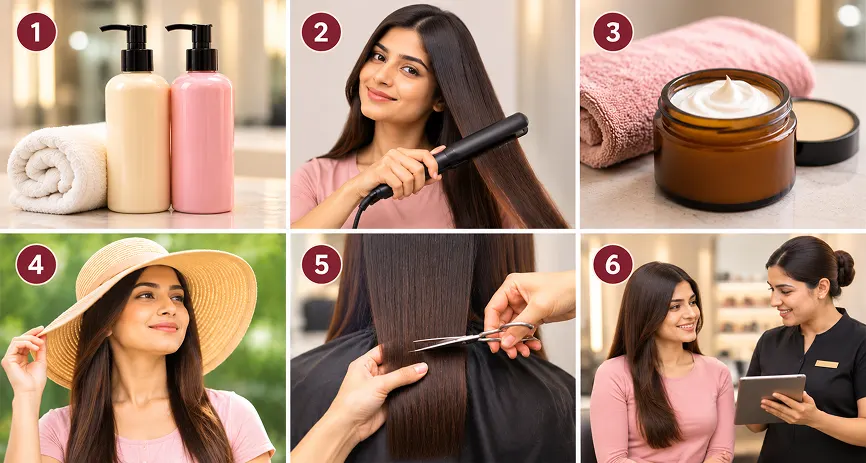
Getting the treatment done is only the first step. Proper aftercare is essential to maintain the results and protect your hair from further damage.
Here are some simple tips to follow.
Choose a gentle shampoo and a nourishing conditioner recommended by your stylist. Avoid products that leave your hair feeling excessively dry.
Your hair has already undergone chemical processing. Frequent use of straighteners and curling irons can increase dryness and breakage. Use a heat protectant whenever heat styling is necessary.
A nourishing hair mask can help improve softness and manage dryness. Use one according to your hair’s needs.
Prolonged sun exposure can make chemically treated hair feel dry and rough. Consider wearing a hat when spending extended periods outdoors.
Trimming damaged ends can help prevent split ends from travelling further up the hair shaft. It also keeps your hairstyle looking neat.
Aftercare instructions vary depending on the treatment and products used. Follow the specific washing and styling recommendations given by your stylist.
There is no single treatment that works best for everyone. Your choice should depend on your natural hair texture, hair condition and the final appearance you want.
Choose hair smoothening if:
Choose hair rebonding if:
Before making a decision, consult an experienced hairstylist. They can assess your hair condition and recommend a treatment that suits your needs.
When comparing hair smoothening vs rebonding, the right choice depends on your desired look and current hair condition. Hair smoothening is ideal for reducing frizz while maintaining a natural, soft appearance. Rebonding, on the other hand, is better suited to those who prefer sleek, pin-straight hair.
However, achieving beautiful hair goes beyond choosing the right treatment. Regular hair care, suitable products and professional guidance all play an important role in maintaining healthy-looking hair. Since both treatments involve chemical processes, it is important to understand the potential risks and choose a treatment that suits your hair type.
If you are unsure which treatment is right for you, consult the professionals at Kimera Salon. Our expert guidance can help you choose the right hair treatment based on your hair texture, condition and styling preferences.
Smoothening is better if you want to reduce frizz and maintain natural movement. Rebonding is more suitable if you want completely straight hair.
When your shoulders feel permanently tense, your mind refuses to slow down, and even a full night’s sleep does not seem to leave you refreshed, relaxation can feel surprisingly difficult.
Dark facial hair, uneven-looking skin tone, or a face that suddenly looks dull can make you feel less confident, even when your skin itself is perfectly healthy.
Whether you are planning your mehendi, haldi, sangeet, wedding ceremony, or reception, here are 20 trending hairstyles for a weddings in India for 2026 to bookmark.
WhatsApp us