Kimera

Home > Blogs > Full Face Threading: Benefits, Process and Aftercare

Full Face Threading: Benefits, Process and Aftercare

At times unwanted facial hair can make your skin look uneven and affect the way your makeup sits. From the hair on your upper lip to the fine hairs on your cheeks and chin, facial hair removal can be a part of your beauty routine.

Shaving and waxing are popular but are not for everyone. So if considering alternates then, shaving can leave little hair stubbles and waxing can be too harsh on delicate facial skin.

Here is where full face threading is a popular option. It is a simple and effective method of hair removal that helps in removing unwanted facial hairs, leaving your skin looking cleaner. But is full face threading right for every skin type? What happens during the treatment and what are the skin care recommendations after the treatment?

What Is Full Face Threading?

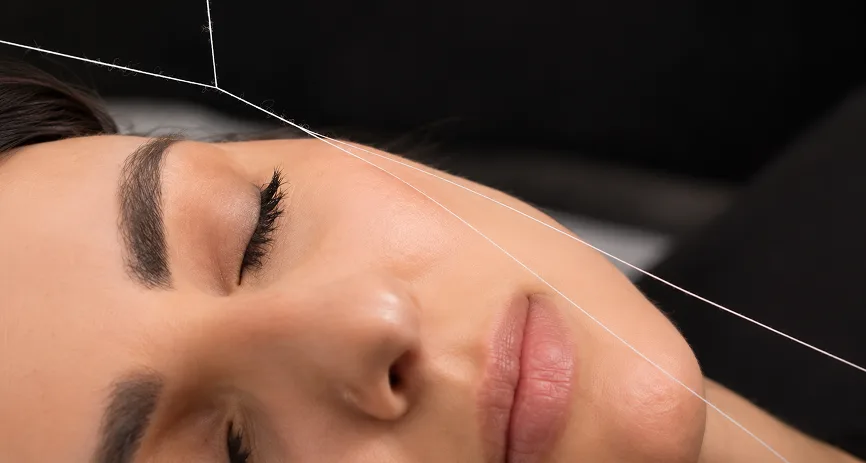
Full face threading is a facial hair removal technique that uses a twisted cotton thread to remove unwanted hair from different areas of the face. Unlike shaving which only cuts hair from the surface, threading removes hair from the roots.

The treatment usually covers the upper lip, forehead, cheeks, chin, jawline and sideburns. However, the exact areas can vary depending on your preferences and the salon’s services.

One of the biggest reasons people prefer threading is its precision. The thread can catch even very fine hair and help create a neat finish around the eyebrows and facial hairline.

For example, if you have noticeable hair on your cheeks and upper lip, full face threading can remove it in one appointment instead of booking separate treatments for different areas.

Full Face Threading 

Benefits of Full Face Threading

Full face threading is more than just a way to remove unwanted hair. It can also make your regular skincare and makeup routine easier. Here are some of its major benefits. 

  1. Removes Hair From the Roots

One of the biggest benefits of full face threading is that it removes hair from the roots. This means you do not have to deal with visible hair stubble immediately after the treatment. 

Since the hair is pulled out completely, regrowth may take a few weeks depending on your natural hair growth cycle. 

  1. Suitable for Different Skin Types

Threading does not involve applying chemical hair removal creams or hot wax to the skin. This makes it a useful option for people who prefer a simple hair removal method. 

It can be suitable for many skin types including sensitive skin. However, people with active acne, skin infections or irritated skin should consult a skincare professional before getting the treatment. 

  1. Gives a Clean and Smooth Appearance

Facial hair can sometimes make the skin look less even. Removing unwanted strands from the cheeks, forehead and chin gives the face a cleaner appearance. 

It can also help makeup sit more evenly on the skin. Foundation and other products may look smoother when fine facial hair is removed. 

  1. Provides Better Precision

Threading allows the beauty professional to control exactly which hairs need to be removed. 

This is especially helpful around the eyebrows, forehead and sideburns. The thread can remove individual strands without affecting the surrounding hair. 

  1. No Chemicals or Heated Wax

Another advantage is that threading does not require chemical hair removal products or heated wax. 

This can be helpful for people who want to avoid applying these products directly to their facial skin. However, the thread and working area should always be clean to reduce the risk of irritation or infection. 

  1. Cost-Effective Hair Removal Option

Compared to some advanced hair removal treatments, threading is generally affordable. It also does not require expensive equipment or complicated preparation. 

With regular appointments, you can maintain a neat appearance without spending too much on facial hair removal.

Full Face Threading Process: What Happens During the Treatment?

If you have never tried full face threading before, you may wonder what the appointment actually involves. The process is quite simple and usually takes around 15 to 30 minutes depending on your facial hair growth and the areas being treated. 

Let’s look at the steps involved. 

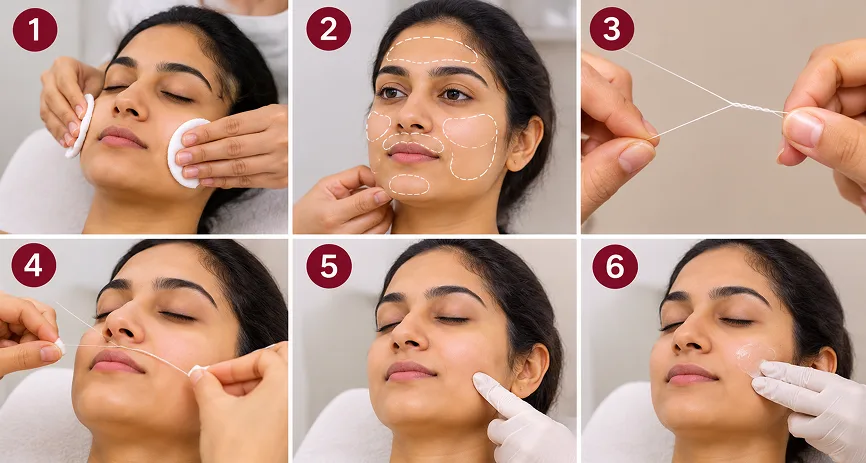
Step 1: Skin Cleansing 

The first step is to clean your face properly. Your beauty professional removes makeup, oil, sweat and dirt from the skin. 

Clean skin helps the thread move smoothly and reduces the chances of irritation. 

Step 2: Identifying the Areas 

Before starting the treatment, the professional identifies the areas where hair needs to be removed. 

This may include the upper lip, chin, cheeks, forehead and jawline. You can also discuss whether you want to keep certain fine facial hairs. 

Step 3: Preparing the Thread 

A thin cotton thread is selected and tied into a loop. The professional twists the thread several times to create a small crossing area. 

This twisted section helps catch and pull out unwanted hair. 

Step 4: Removing Facial Hair 

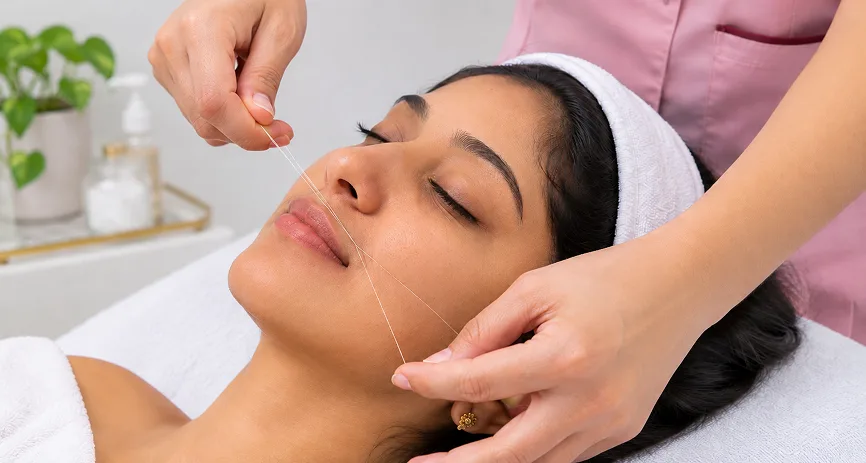
The professional moves the twisted thread over the skin using controlled hand movements. As the thread moves, it catches the hair and removes it from the roots. 

The treatment is usually performed section by section. You may feel a slight pulling or pinching sensation during the process. 

Areas such as the upper lip and chin can feel more sensitive than the cheeks. 

Step 5: Checking the Skin 

Once the threading is complete, the professional checks the face for any remaining hair. 

They may remove a few missed strands to give the skin a neat finish. 

Step 6: Applying a Soothing Product 

Finally, a gentle soothing gel or moisturiser may be applied to calm the skin. 

This helps reduce temporary redness and keeps the skin comfortable after the treatment.

Full Face Threading Process

Full Face Threading vs Waxing: Which Is Better?

Both threading and waxing are common facial hair removal methods. However, they work differently and offer different experiences.

Comparison Full Face Threading Facial Waxing
Hair removalRemoves hair from the rootsRemoves hair from the roots
Products usedCotton threadWax
PrecisionHigh precisionCovers larger areas
Skin contactLimited contact with the threadWax is applied directly
ChemicalsNo chemical hair removal cream requiredDepends on the wax formula
SensationPulling or pinchingPulling sensation
RegrowthUsually takes a few weeksUsually takes a few weeks

So which one should you choose?

If you prefer precise hair removal and want to avoid applying wax to your face, threading can be a good option. Waxing may be more convenient for removing hair from larger areas in one go.

Your skin sensitivity and personal comfort should guide your decision.

Aftercare Tips for Full Face Threading

Your skincare routine after threading is just as important as the treatment itself. Since hair is removed from the roots, the skin may become slightly red or sensitive for a few hours. 

Following the right aftercare routine can help your skin settle comfortably. 

  1. Avoid Touching Your Face

Try not to touch or rub your face immediately after threading. Your skin may be sensitive and touching it with unclean hands can transfer bacteria. 

Allow your skin some time to recover. 

  1. Avoid Makeup for a Few Hours

It is better to avoid applying heavy makeup immediately after the treatment. Foundation, concealer and other products may irritate freshly threaded skin. 

If possible, give your skin a few hours to settle before applying makeup. 

  1. Use a Gentle Moisturiser

Apply a mild and fragrance-free moisturiser to keep your skin hydrated. If you experience slight redness, a cool compress can also help calm the area. 

Avoid using harsh products that may cause additional irritation. 

  1. Stay Away From Direct Sunlight

Your skin may feel more sensitive after threading. Avoid prolonged sun exposure immediately after the treatment. 

Use a broad-spectrum sunscreen with SPF 30 or higher when going outdoors. Reapply as needed. 

  1. Avoid Exfoliation for 24 to 48 Hours

Do not use facial scrubs, exfoliating acids or strong skincare treatments immediately after threading. 

These products may cause irritation. Give your skin at least 24 to 48 hours before returning to your regular exfoliation routine. 

  1. Avoid Excessive Heat and Sweating

Try to avoid steam facials, saunas and intense workouts for the first 24 hours if your skin feels irritated. 

Excessive heat and sweat can make freshly threaded skin uncomfortable.

How Often Should You Get Full Face Threading?

The frequency of full face threading depends on how quickly your facial hair grows. 

Most people prefer getting the treatment every three to four weeks. However, some may need it sooner while others can wait longer. 

There is no fixed schedule that works for everyone. Pay attention to your hair growth and book an appointment when you feel it is needed. 

One important thing to remember is that regular threading does not guarantee permanent hair reduction. Hair growth patterns are influenced by genetics and hormones.

Is Full Face Threading Safe for Sensitive Skin?

Full face threading can be a suitable hair removal option for many people with sensitive skin because it does not require hot wax or chemical depilatory creams. 

However, sensitive skin can still experience temporary redness, small bumps or irritation after the treatment. 

If you have active acne, eczema, rosacea or broken skin, speak to a dermatologist before proceeding. Always choose a trained professional who follows proper hygiene practices and uses a fresh, clean thread. 

Avoid threading over inflamed pimples as it can worsen irritation.

Who Should Consider Full Face Threading?

Full face threading may be a good choice for people who: 

  • Want to remove unwanted facial hair without using wax. 
  • Prefer a precise hair removal technique. 
  • Have fine hair around the cheeks and forehead. 
  • Want a clean finish before special occasions. 
  • Prefer an affordable and quick salon treatment. 
  • Want their makeup to sit more evenly on the skin. 

However, people with irritated skin or active skin conditions should wait until their skin has healed or seek professional advice.

Who Should Consider Full Face Threading

Conclusion

Full face threading is a simple and effective way to remove unwanted facial hair while maintaining a clean and neat appearance. From removing fine hair on the cheeks to shaping the facial hairline, it offers precision and convenience without the need for heated wax or chemical hair removal creams. 

The key is to choose an experienced beauty professional and follow proper aftercare. A little attention before and after the appointment can make the experience much more comfortable. 

At Kimera, we believe that beauty is all about feeling confident and comfortable in your own skin. Explore professional beauty and grooming services at Kimera and give yourself the care you deserve. Make time for yourself and enjoy looking your best every day.

Disclaimer: Every treatment or procedure suggested on this blog may vary from guest to guest, as each person’s hair and skin are unique and may respond differently. Book an appointment at our salon for a free consultation before proceeding with any treatment or procedure.

Trending Blogs

FAQs

1. How long does full face threading take?

Full face threading generally takes around 15 to 30 minutes depending on hair growth and the areas being covered.
You may feel slight pulling or pinching during the treatment. The discomfort is usually manageable and varies from person to person.
The results usually last around three to four weeks. This depends on your natural hair growth cycle.
It is better to wait a few hours before applying makeup. This gives your skin time to settle and reduces the chances of irritation.
No. Threading does not change the thickness or growth rate of facial hair. Regrowth may feel slightly different but the treatment does not make hair thicker.

Related Blogs

Hair Smoothening vs Rebonding: Which Is Better? 

Frizzy hair, stubborn curls and unmanageable strands can make everyday hairstyling frustrating. You may spend hours brushing your hair or using a straightener only to see it turn frizzy again after stepping outside. This is why many people consider chemical hair treatments to achieve smooth and manageable hair.

Read More »
Scroll to Top
Book an Appointment